

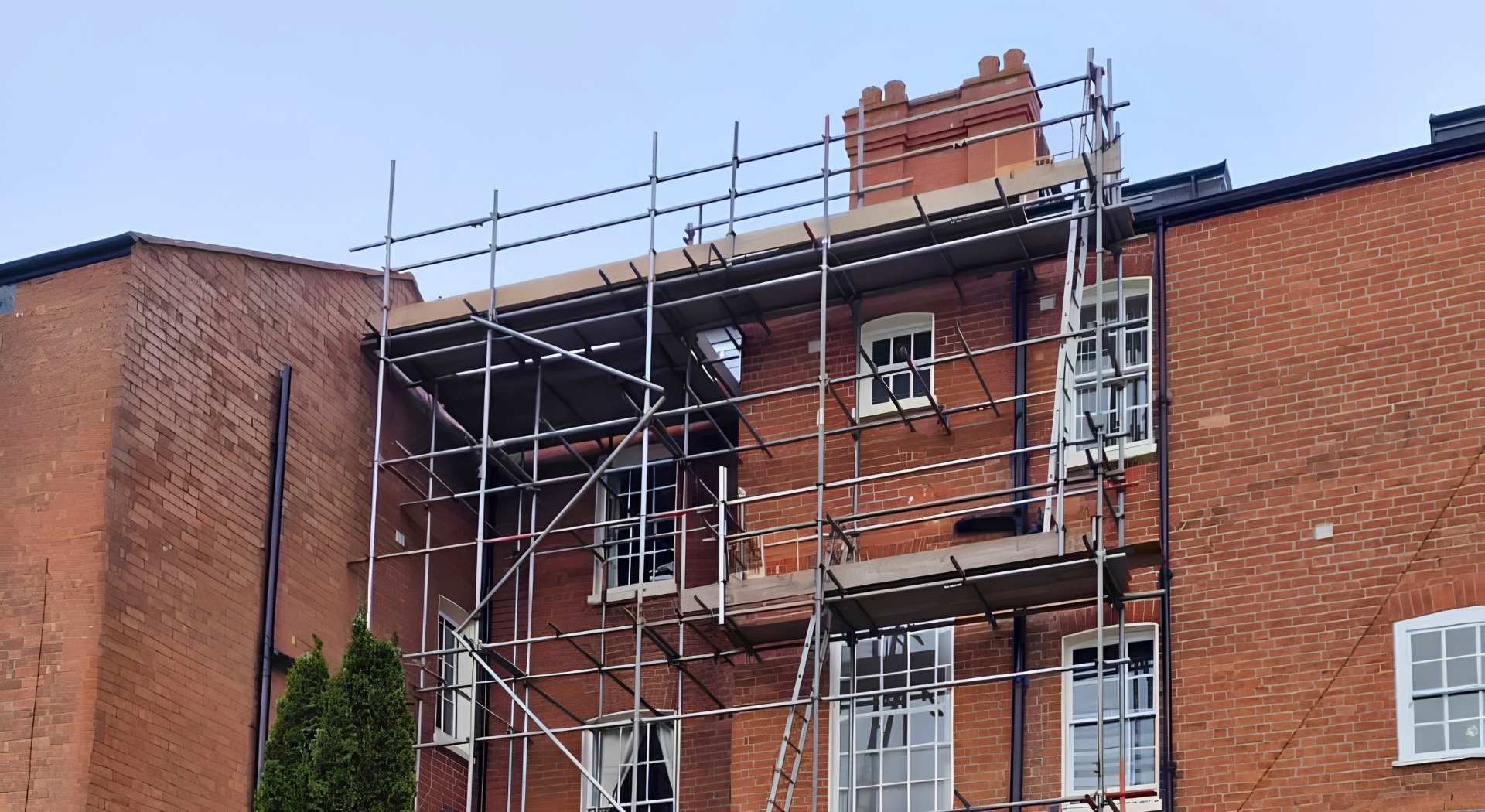
If your roof has developed a leak, loose tiles or storm damage, one of the first questions you may ask is whether scaffolding is actually necessary. Many homeowners are understandably concerned about the additional cost of scaffolding and wonder whether roofers can simply use ladders to carry out the work.
The reality is that scaffolding is often one of the most important elements of a successful roof repair project. It provides safe access for contractors, improves productivity and helps ensure work can be completed to a high standard. In many cases, scaffolding also helps protect homeowners from unnecessary risks, delays and additional repair costs.
Across Birmingham, Solihull, Worcestershire and the wider West Midlands, roof repairs are one of the most common reasons property owners require scaffolding. Whether the work involves replacing damaged tiles, repairing a chimney or carrying out a complete roof replacement, safe access is essential.
This guide explains when scaffolding is required, when alternative access methods may be suitable and why professional roofing contractors often recommend scaffolding as the safest solution.
Quick Answer
Most roof repairs require scaffolding where contractors need prolonged access to elevated areas of a property. While some very minor repairs may occasionally be completed using ladders or specialist access equipment, scaffolding is generally the safest and most practical solution for roof repairs, chimney work, roof replacements and larger maintenance projects.
Roof repairs that commonly require scaffolding:
- Roof tile replacement
- Chimney repairs
- Ridge tile repairs
- Lead flashing replacement
- Roof refurbishments
- Roof replacements
Main benefits:
- Improved safety
- Faster project completion
- Better access
- Easier material handling
- Reduced risk of accidents
Coverage Areas:
- Birmingham
- Solihull
- Worcestershire
- West Midlands
What You’ll Learn
In this guide we’ll explain:
- When scaffolding is required for roof repairs
- Whether roofers can work without scaffolding
- The safest way to access a roof
- Legal considerations for working at height
- Common mistakes homeowners make
- Why professional access solutions save money
Why Is Safe Roof Access So Important?
Roof work remains one of the highest-risk activities within the construction and maintenance sectors. Even relatively simple repairs can become dangerous when contractors are working several metres above ground level.
Many roofing tasks involve carrying tools, materials and equipment while working on sloping surfaces. Weather conditions can also change quickly, creating additional hazards.
Safe access allows roofing contractors to focus on completing repairs correctly rather than constantly managing the risks associated with unstable working positions.
This is one of the main reasons professional roofing companies frequently recommend scaffolding. A secure working platform reduces risks, improves efficiency and provides better access to all areas of the roof.
According to HSE Working at Height Guidance, falls from height remain one of the leading causes of serious injuries within the construction industry. Proper access arrangements play a critical role in reducing these risks.
What Roof Repairs Usually Require Scaffolding?
Not every roofing project is identical. Some repairs are relatively straightforward, while others require extensive access around multiple elevations of the property.
Roof Tile Replacement
Damaged or missing roof tiles are among the most common roofing issues faced by homeowners.
While replacing a single tile may appear to be a simple task, the location of the damage often determines whether scaffolding is required. If repairs are needed near roof edges or across larger sections of the roof, scaffolding provides a much safer working environment.
In many cases, roofing contractors will recommend scaffolding because it allows them to inspect surrounding areas of the roof at the same time, identifying any additional issues that may require attention.
Chimney Repairs
Chimneys are one of the most difficult parts of a property to access safely.
Repair work often involves repointing brickwork, replacing lead flashing, rebuilding chimney stacks or fitting chimney cowls. These tasks usually require contractors to work in elevated positions for extended periods.
Scaffolding provides secure access and allows repairs to be completed safely and efficiently.
For chimney projects, scaffolding is often considered essential rather than optional.
Lead Flashing Repairs
Lead flashing plays an important role in preventing water penetration around chimneys, roof junctions and abutments.
Repairing or replacing flashing often requires contractors to work in awkward positions where ladders alone may not provide sufficient stability.
Scaffolding improves access and allows the work to be completed more accurately.
Ridge Tile Repairs
Ridge tiles sit along the highest point of the roof and are exposed to wind, rain and changing weather conditions throughout the year.
When ridge tiles become loose or damaged, safe access becomes particularly important because work is being carried out at the highest point of the building.
Scaffolding provides a stable working platform that significantly improves safety during these repairs.
Complete Roof Replacements
Full roof replacements almost always require scaffolding.
Roofers need continuous access around the property while removing existing materials and installing new roofing systems.
Scaffolding helps improve productivity, allows materials to be stored safely and creates a secure working environment throughout the project.
Can Roof Repairs Be Done Without Scaffolding?
This is one of the most common questions homeowners ask.
The simple answer is that some minor repairs can occasionally be carried out without scaffolding. However, whether this is appropriate depends entirely on the nature of the work and the risks involved.
A roofing contractor may sometimes use ladders or specialist access equipment for very small repairs that can be completed quickly and safely.
Examples might include a brief inspection or a minor adjustment that does not require prolonged working at height.
However, as soon as repairs become more complex, involve larger areas of the roof or require carrying materials and tools, scaffolding becomes a much safer option.
Professional roofing companies will normally assess the risks before deciding on the most appropriate access solution.
In many situations, the cost of scaffolding is outweighed by the safety benefits and improved efficiency it provides.
Are Ladders a Suitable Alternative?
Ladders certainly have their place within the roofing industry.
They are useful for inspections, surveys and certain short-duration tasks. However, ladders are generally intended as a means of access rather than a long-term working platform.
Working from a ladder for extended periods can be uncomfortable, less productive and potentially more hazardous than working from a properly installed scaffold.
Scaffolding provides a stable platform that allows roofers to move freely, handle materials more effectively and complete repairs to a higher standard.
For this reason, scaffolding is often the preferred solution for anything beyond the most minor repair work.
What Does the Law Say About Roofing Access?
When carrying out roof repairs, safety is not simply a recommendation – it is a legal requirement.
The Work at Height Regulations 2005 place duties on employers, contractors and anyone responsible for organising work at height. These regulations require work to be properly planned, appropriately supervised and carried out by competent individuals using suitable equipment.
The regulations do not specifically state that scaffolding must be used for every roof repair. However, they do require contractors to select the safest and most suitable access method for the task being undertaken.
In many roofing situations, scaffolding is considered the safest option because it provides a stable working platform, edge protection and improved access to materials and equipment.
Professional roofing contractors and scaffolding companies understand these requirements and will assess each project individually before recommending the most appropriate solution.
For homeowners, this means choosing experienced contractors who take safety seriously and follow industry best practice.

Why Roofing Contractors Prefer Scaffolding
Many homeowners initially view scaffolding as an additional project cost. Roofing contractors often see it differently.
For professional roofers, scaffolding is an investment in safety, efficiency and quality.
When roofers have safe access to all working areas, they can move around the property more easily, carry materials safely and complete repairs more efficiently. This often reduces the overall project duration and allows work to be completed to a higher standard.
Scaffolding also provides additional space for storing materials, tools and equipment. Rather than constantly climbing up and down ladders, contractors can focus on carrying out the work itself.
The result is often a safer project, a faster programme and a better-quality finish.
This is why many reputable roofing companies recommend scaffolding even when alternative access methods may technically be possible.
When Is Temporary Roof Scaffolding Required?
While standard scaffolding is suitable for many roofing projects, some situations require additional weather protection.
Temporary roof scaffolding is commonly used during major roof refurbishments, complete roof replacements and structural repair projects where the roof covering may be removed for an extended period.
Without protection, poor weather can cause significant disruption. Rainwater entering the property may damage internal finishes, delay construction works and increase overall project costs.
Temporary roof systems create a covered working environment that helps protect both the building and the contractors working on it.
These systems are particularly popular for:
- Major roof replacements
- Heritage building renovations
- Commercial refurbishments
- Structural timber repairs
- Projects scheduled during winter months
Although temporary roof systems involve additional costs, they often help prevent much larger costs associated with weather-related delays and damage.
Does Scaffolding Make Roof Repairs More Expensive?
This is another question homeowners frequently ask.
On the surface, scaffolding increases the upfront cost of a roofing project. However, focusing only on the initial expense can be misleading.
Without scaffolding, roof repairs may take longer to complete. Contractors may require additional labour, more time and alternative access equipment to complete the work safely.
Scaffolding often improves productivity significantly. Roofers can work more efficiently, materials can be positioned closer to the work area and access is available throughout the project.
In many cases, the improved efficiency helps offset a portion of the scaffolding cost.
More importantly, scaffolding helps reduce risks. Avoiding accidents, property damage and project delays can deliver substantial value that extends well beyond the initial hire cost.
Case Study – Roof Repair Project in Solihull
Customer Problem
A homeowner in Solihull contacted us after noticing water ingress within their loft space following a period of severe weather.
An inspection identified several damaged roof tiles and deteriorated lead flashing around the chimney. The roofing contractor required safe access to multiple areas of the roof while carrying out the repairs.
The property also featured a conservatory at the rear, creating additional access challenges.
Solution
We carried out a site survey and designed a scaffold structure that provided safe access to all roof elevations while protecting the conservatory below.
The scaffold was installed quickly to allow roofing works to begin without delay.
Working closely with the roofing contractor ensured access remained available throughout the project while minimising disruption to the homeowner.
Outcome
The roof repairs were completed safely and efficiently.
The contractor was able to replace damaged tiles, repair the flashing and carry out a full roof inspection without access restrictions.
The homeowner benefited from a successful repair project with minimal disruption and improved confidence in the long-term condition of the roof.
Common Mistakes
One of the most common mistakes homeowners make is delaying roof repairs after noticing damage.
A small leak can quickly develop into a much larger problem if water continues to penetrate the roof structure. What begins as a minor repair may eventually require extensive remedial work.
Another mistake is assuming ladders are always the most cost-effective solution. While ladders may appear cheaper initially, they can reduce productivity and may not provide the safest access arrangement for larger repairs.
Some homeowners also focus entirely on the cost of scaffolding rather than the overall value it provides. Safe access often contributes directly to faster project completion and improved workmanship.
Choosing contractors based solely on price can also create problems. Experience, safety standards and reliability should always be considered alongside cost.
Why Professional Advice Saves Money
Professional advice helps ensure roof repairs are approached correctly from the outset.
Experienced scaffolding contractors can identify access challenges before work begins and recommend practical solutions that support both safety and efficiency.
Early planning often reduces delays and helps avoid unexpected modifications once the project is underway.
Professional scaffolding also enables roofing contractors to work more effectively, which can improve productivity and reduce overall project timescales.
Perhaps most importantly, safe access reduces the risk of accidents, property damage and costly project interruptions.
When viewed in the context of the entire project, professional scaffolding frequently delivers excellent value.
Related Reading
You may also find the following guides useful:
- Guide to Scaffold Hire Birmingham
- How Much Does Scaffolding Cost in Birmingham?
- Roofing Scaffolding Birmingham
- Temporary Roof Scaffolding
- Residential Scaffolding Birmingham
- Emergency Scaffolding Services
- Contact Us
FAQ Section
1. Do all roof repairs require scaffolding?
No. Some minor repairs may be completed using ladders or specialist access equipment. However, many roof repairs require scaffolding to provide safe and practical access.
2. Is scaffolding legally required for roof repairs?
Not in every situation. The law requires contractors to use the safest and most suitable access method for the task. In many cases, this will be scaffolding.
3. Can roofers work from ladders instead of scaffolding?
For some short-duration tasks, yes. However, scaffolding is generally safer and more practical for larger or longer-duration projects.
4. How much does scaffolding add to roof repair costs?
This depends on the size of the property, the complexity of the scaffold and the duration of the project. A site survey is normally required to provide accurate pricing.
5. Do chimney repairs require scaffolding?
In most cases, yes. Chimneys are often difficult to access safely without a properly designed scaffold structure.
6. Can scaffolding be installed over a conservatory?
Yes. Specialist scaffold designs can be used to provide access while protecting conservatories and other fragile structures.
7. How long does it take to erect scaffolding for roof repairs?
Most domestic scaffolding projects can be installed within a day, although larger structures may take longer.
8. What is temporary roof scaffolding?
Temporary roof scaffolding provides weather protection during roof replacements and major refurbishment projects.
9. Can roof repairs continue during bad weather?
This depends on the severity of the weather and the type of work being undertaken. Temporary roof systems can help reduce weather-related disruption.
10. How much notice should I give before arranging scaffolding?
The earlier scaffolding is arranged, the better. Early planning helps avoid delays and improves project coordination.
Key Takeaways
- Many roof repairs require scaffolding to provide safe access.
- Scaffolding improves safety, productivity and project quality.
- Chimney repairs and roof replacements almost always require access solutions.
- Temporary roof systems provide valuable weather protection.
- Professional planning helps avoid delays and unexpected costs.
- Safe access is an essential part of any successful roofing project.
Conclusion
If you are asking, “Do I need scaffolding for roof repairs?”, the answer in many cases is yes.
While minor repairs can occasionally be completed using ladders or alternative access equipment, scaffolding remains the safest and most practical solution for the majority of roofing projects. It improves safety, allows contractors to work more efficiently and often contributes to a better-quality result.
Whether you require a small roof repair, chimney restoration or complete roof replacement, professionally installed scaffolding provides the secure access needed to complete the work safely and effectively.
Across Birmingham, Solihull, Worcestershire and the wider West Midlands, scaffolding continues to play a vital role in supporting safe and successful roofing projects.
Need Advice?
If you are planning roof repairs and would like professional advice regarding scaffolding requirements, we are happy to help.
We provide residential scaffolding, roofing scaffolding, temporary roof systems and specialist access solutions throughout Birmingham, Solihull, Worcestershire and the West Midlands.
Please contact us for a free quotation and expert advice.
Blaize Scaffolding
Malvern View Outwood
Kidderminster
DY10 4RB
Telephone: 0121 270 7868
Website: https://blaizescaffolding.co.uk/